
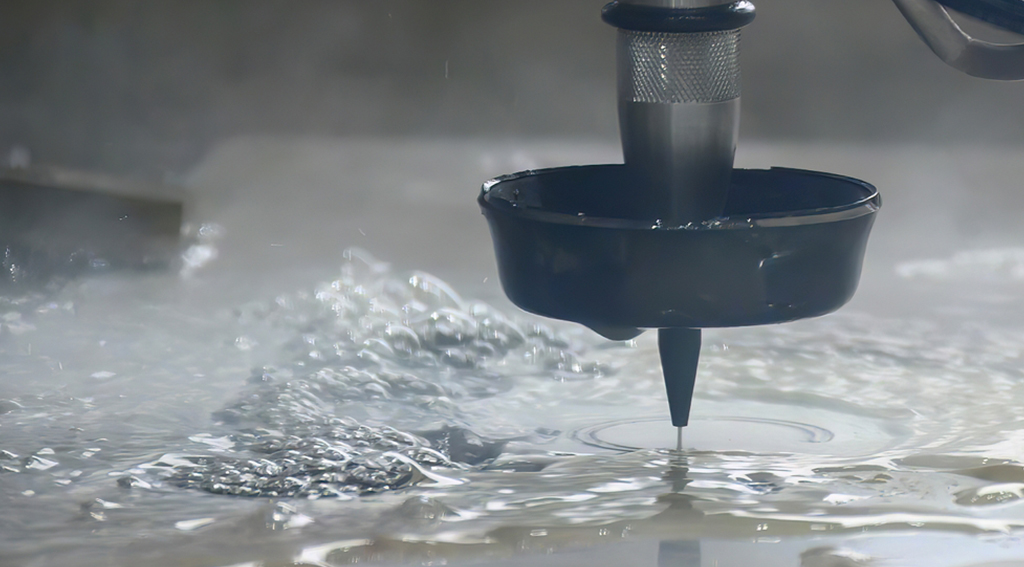
Examining the technical factors that determine edge quality in waterjet metal cutting helps achieve more precise and repeatable results. Variables such as the pressure level, nozzle diameter, abrasive (garnet) feed rate, cutting speed, and material thickness directly affect the resulting edge quality. High pressure and the correct nozzle selection help keep the jet stable during metal cutting, supporting a cleaner and smoother cut line. If the abrasive amount is too low, roughness can appear along the cut, while excessive abrasive can cause unnecessary consumption and waviness in the cutting path.
Setting the cutting speed correctly also plays a major role in edge quality. Moving too fast can make the cut surface scratched, serrated, and wavy, while cutting too slowly can lead to excessive erosion and widening along the cut line. Therefore, selecting a speed suitable for the material type and thickness is a key principle for achieving the best results in waterjet metal cutting. In addition, having a flat material surface, a vibration-free cutting table, and maintaining a consistent stand-off distance between the nozzle and the part are other important factors that contribute to a smooth edge.
High edge quality in waterjet cutting helps eliminate the need for secondary operations such as sanding or grinding. This saves time and significantly reduces production costs. Especially in projects that require tight tolerances in the automotive, machinery manufacturing, and mold-making industries, waterjet cutting is preferred precisely because of its high edge quality and repeatable outcomes. With proper technical settings, waterjet metal cutting continues to be a reliable industrial solution, delivering smooth and clean edges on both thin and thick materials.