
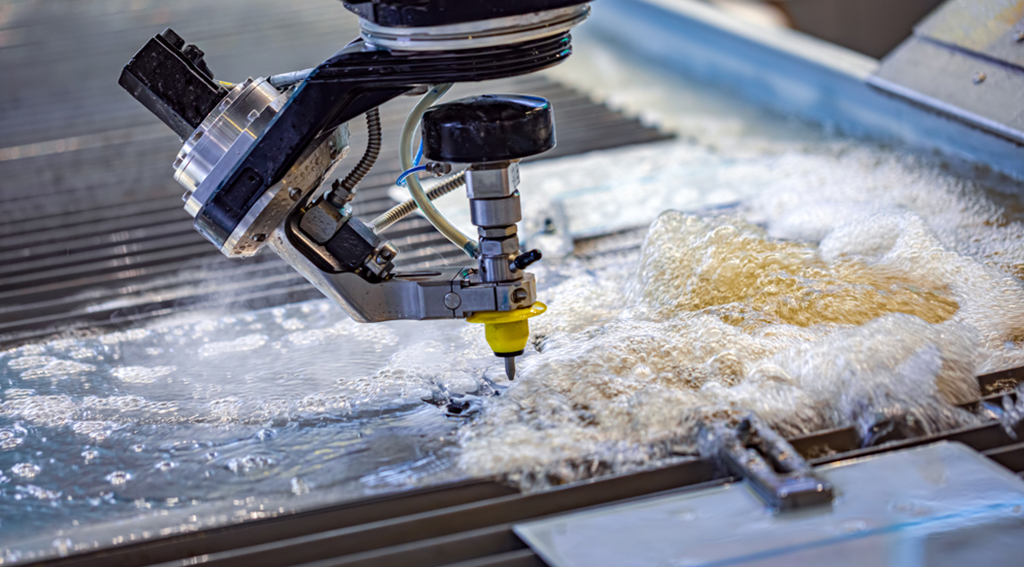
Understanding how waterjet cutting is used in industry and the results achieved on different materials is important for choosing the right method. Waterjet cutting technology is based on directing high-pressure water combined with abrasive particles onto the material surface, providing a highly precise cutting process without heat impact.
In production processes where thermal deformation is not desired, waterjet cutting becomes a much more advantageous option compared to alternative methods such as laser or plasma.
Its ability to deliver the same precision on many different materials such as metal, glass, stone, ceramics, plastic, composites, and rubber gives the method a wide range of industrial applications.
One of the main reasons waterjet cutting is preferred in industry is that it does not leave unwanted effects on the material surface such as burn marks, hardening, melting, or cracking. This feature is critical for meeting high quality expectations, especially in sectors such as automotive, aerospace, machinery manufacturing, defense industry, advertising, and architectural decoration. In addition, since waterjet cutting operates with minimal scrap in production processes, it optimizes material usage and provides repeatable results for parts that require precise contours. Thanks to its CNC-controlled structure, even the most complex geometries can be processed with high accuracy.
Another advantage of waterjet cutting is that it supports a versatile range of material thicknesses. Being able to work from thin sheets to thick steel blocks gives manufacturers the flexibility to manage different projects with a single cutting method. At the same time, since no burrs form on the surface after cutting, the need for additional processing is eliminated in many applications and the process moves forward quickly. Considering all these features, waterjet cutting stands out as a technology that increases quality and optimizes costs in modern production lines.